ASE AG
Data Visualisation
Role
Lead Designer
collaborators
Annika Berger (Design)
Matteo Gamba (Dev)

The Goal
Empower retail managers to quickly find and act on key mall metrics. Allowing managers to draw smart AI-driven insights from complex data sets that allows them to make informed decisions.
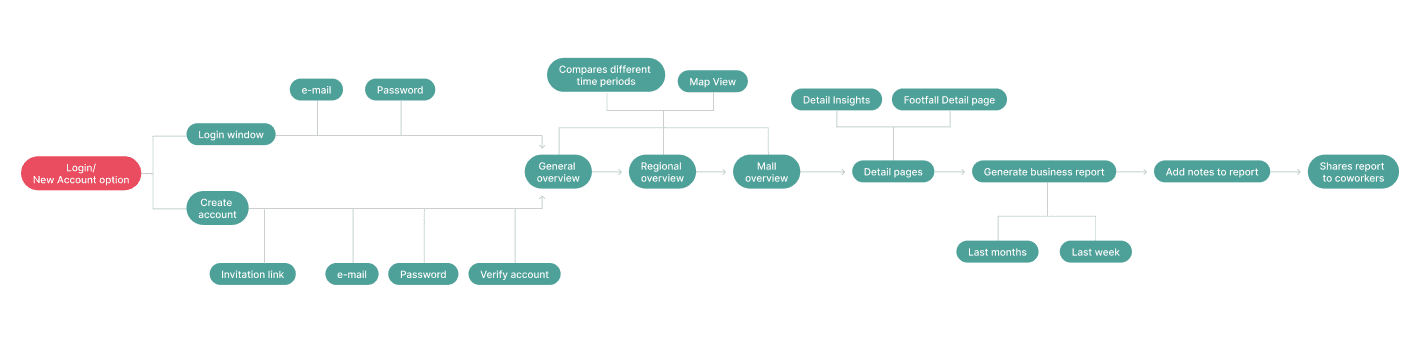
UXR
There was a strong demand for actionable insights which we explored to in-depth research and user interviews.
Decision Making
How do retail managers seek insights? On which data are decisions based on?

Habits
How do operators interact with the retail dashboard, what numbers are reviewed daily?

Situational awareness
What insights, trends and analysis should be readily available? How can we provide better insights into their business?

Priorisation
How can we best track visitor insights and footfall numbers?
Challenge
The existing retail dashboard was a maze of complex data and a tech-heavy interface, making it tough for users to navigate and extract insights.
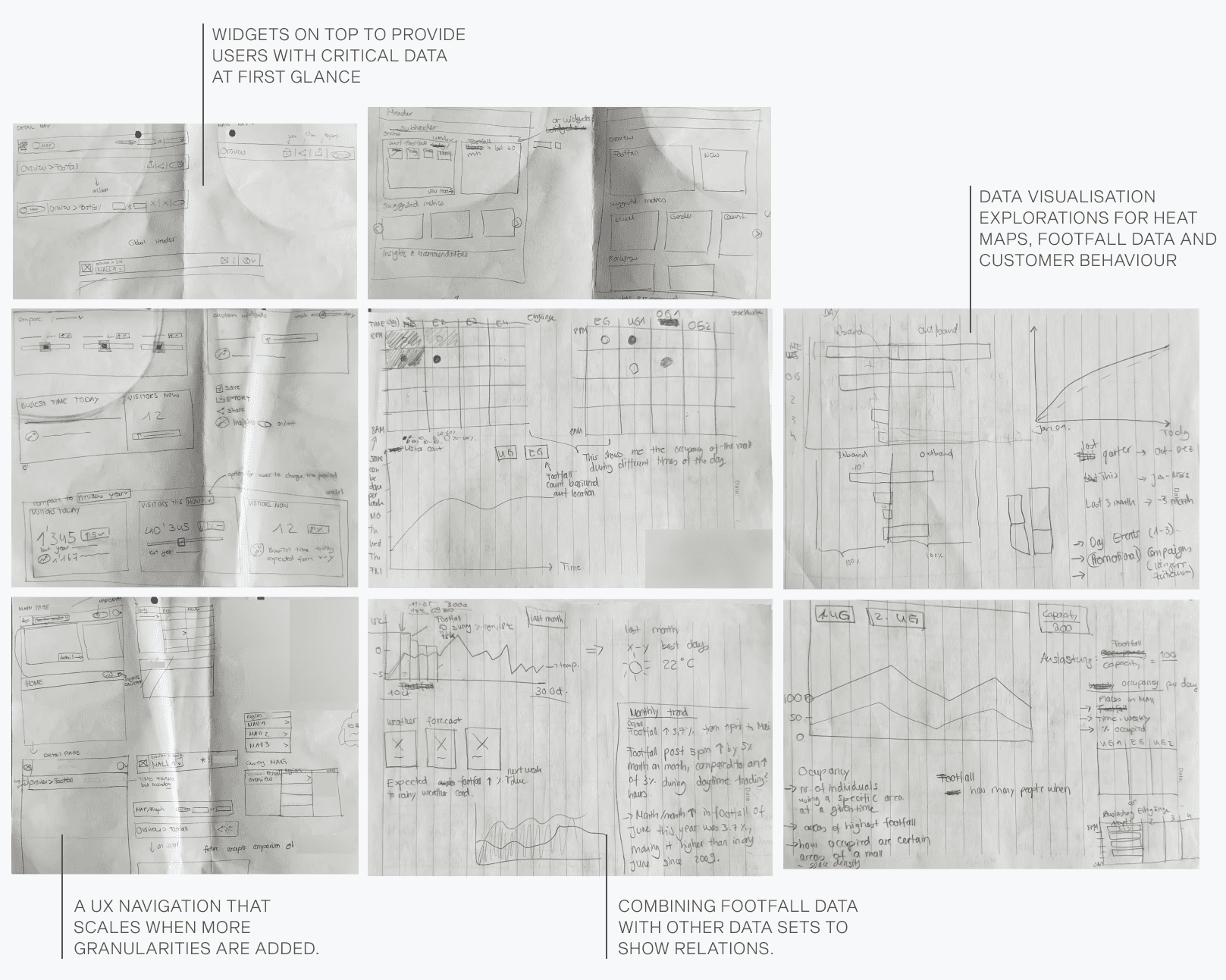
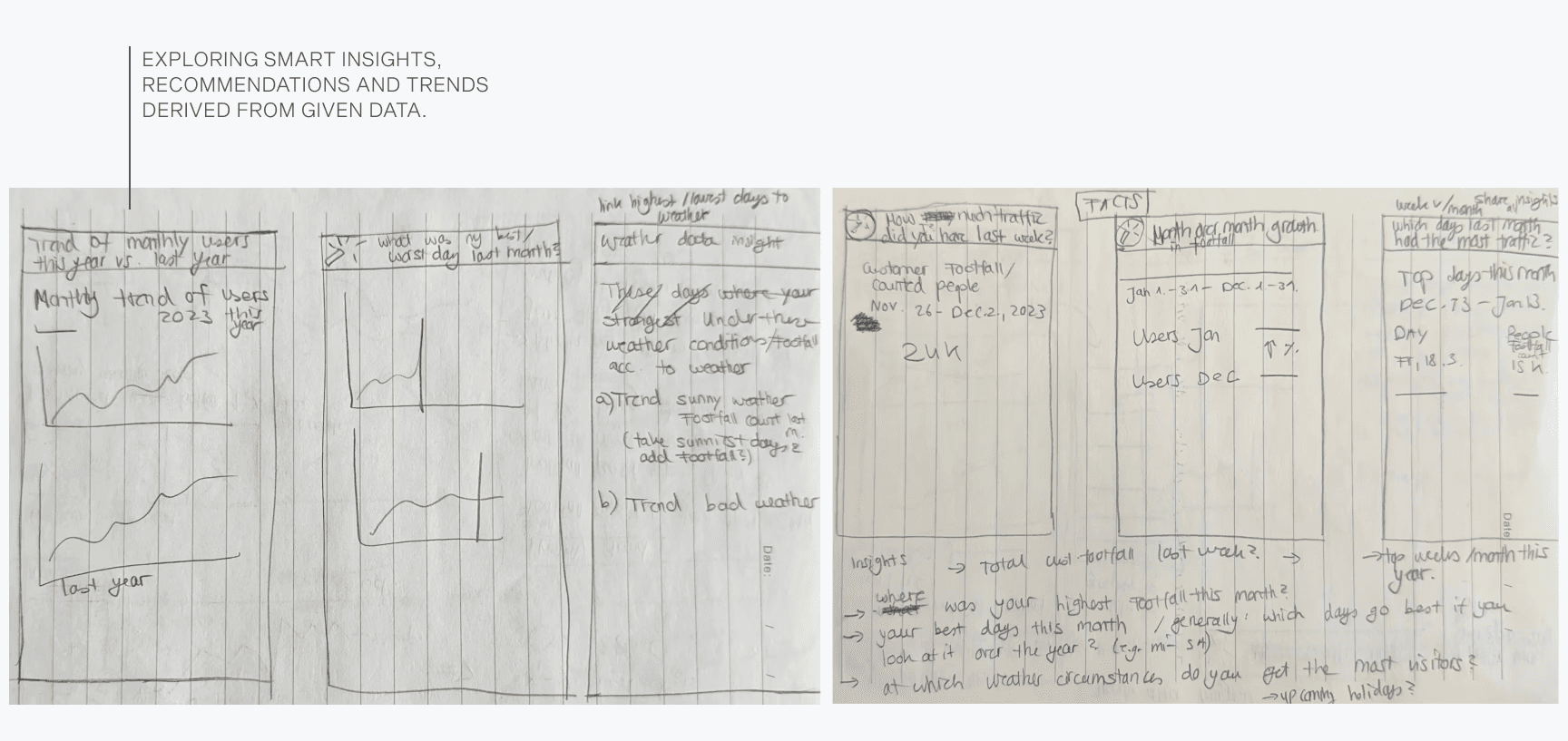
Sketching graphs, navigation, widgets, and home screen layouts helped us prioritize UX and highlight key metrics. Focusing first on frontline mall managers, we aimed to simplify the interface, and set the baseline for scalable solutions.
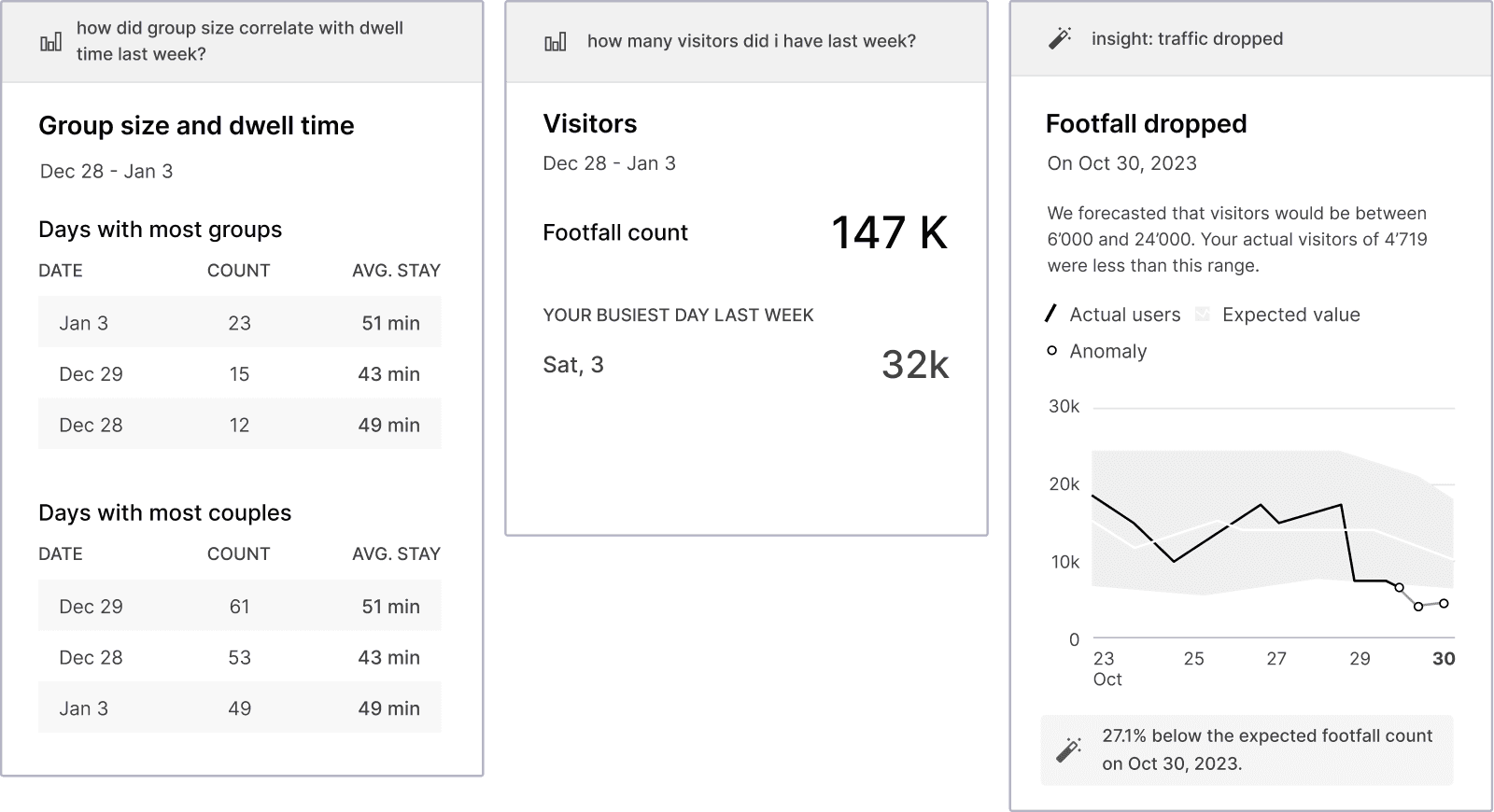
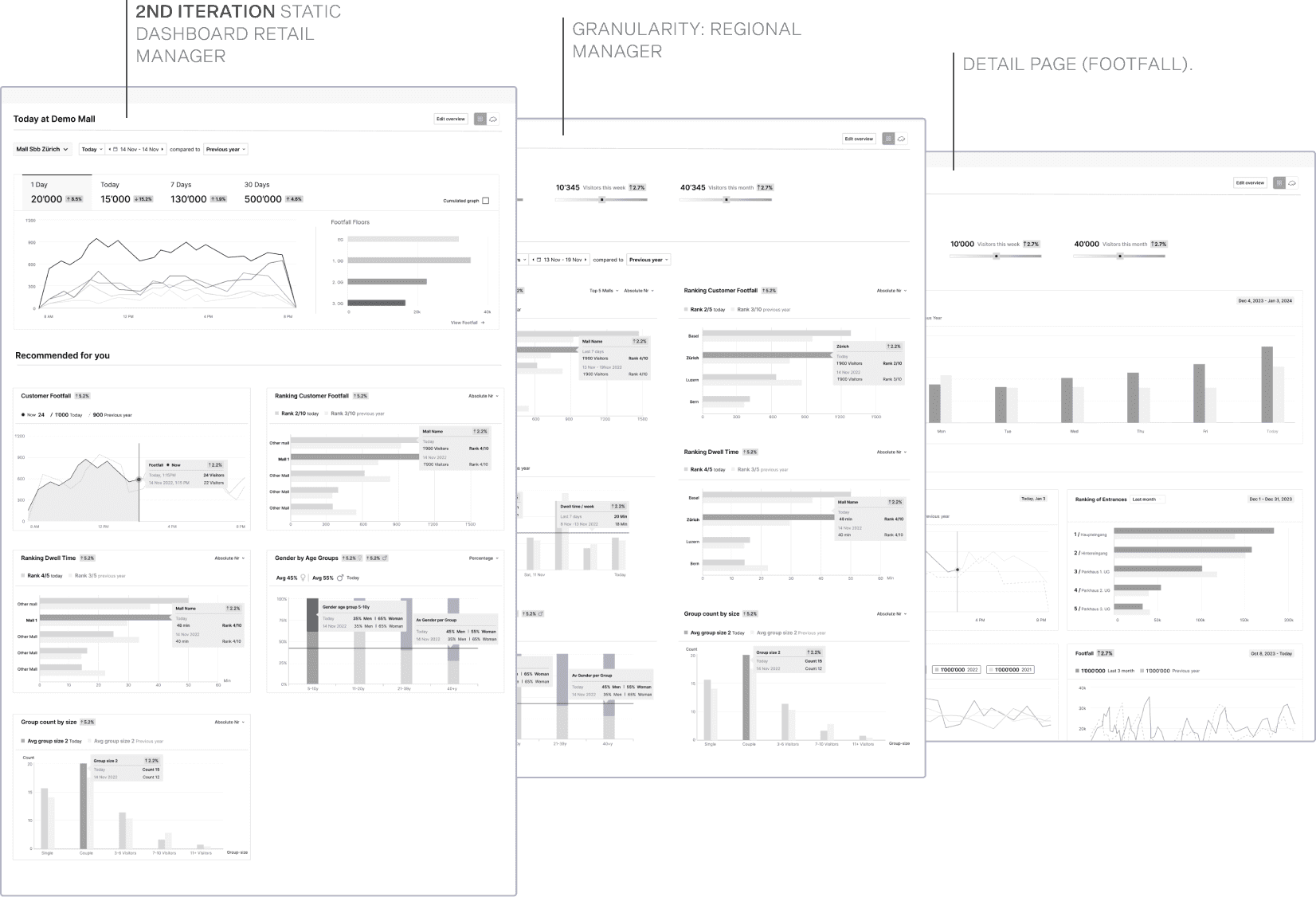
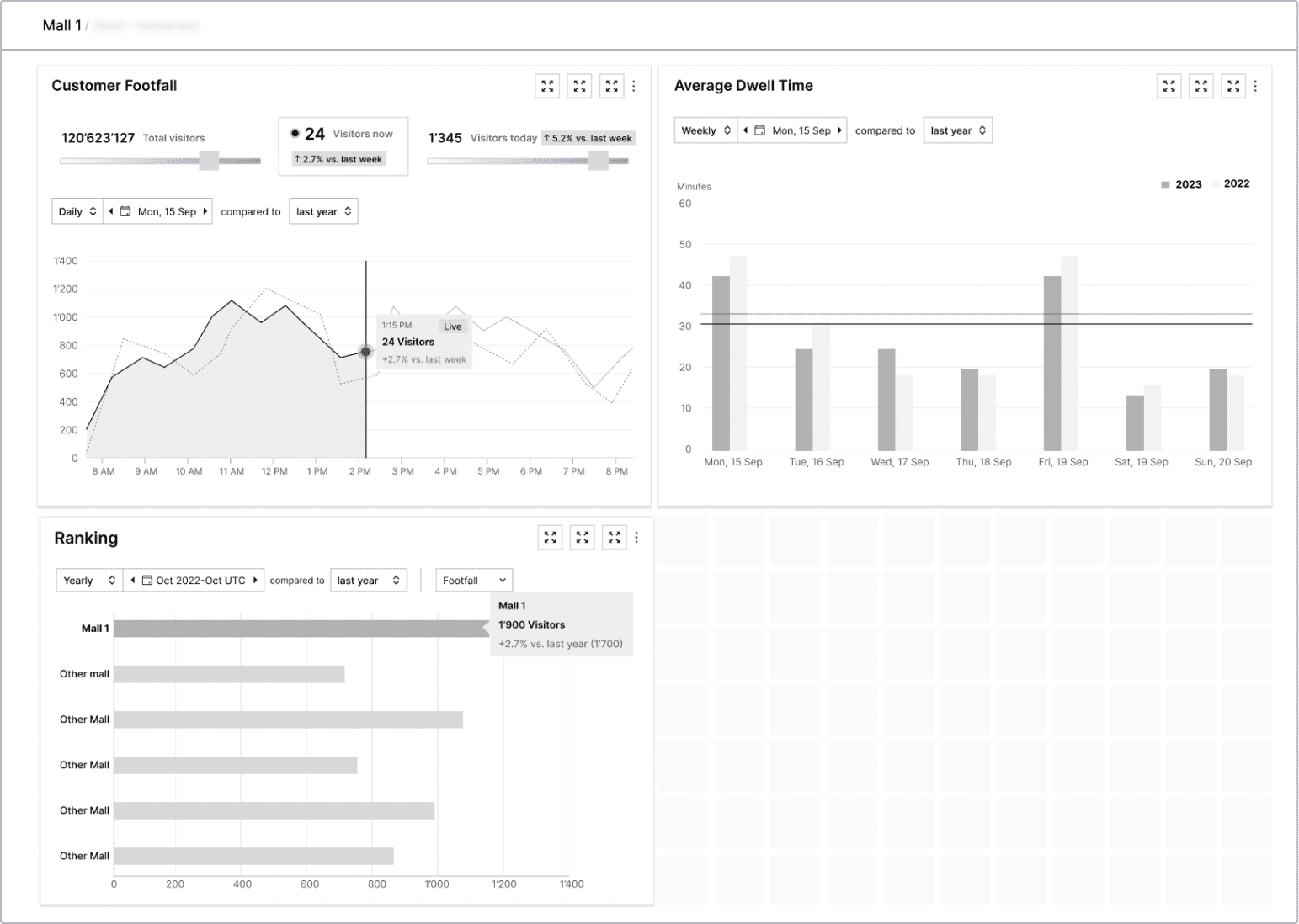
We went through several iterations. The first used a custom grid-view dashboard focused on footfall metrics. The second showed that a static default dashboard works best for novice users, with a primary graph combining datasets for a quick overview. Ranking proved important for managers to compare performance, and finally, we developed insights and analytical recommendations based on trends from our graphs.
FINAL EXPERIENCE
Usability testings of the MVP have brought 90% positive feedback. The MVP has been implemented and tested, setting the starting point for the clients analytics platform.
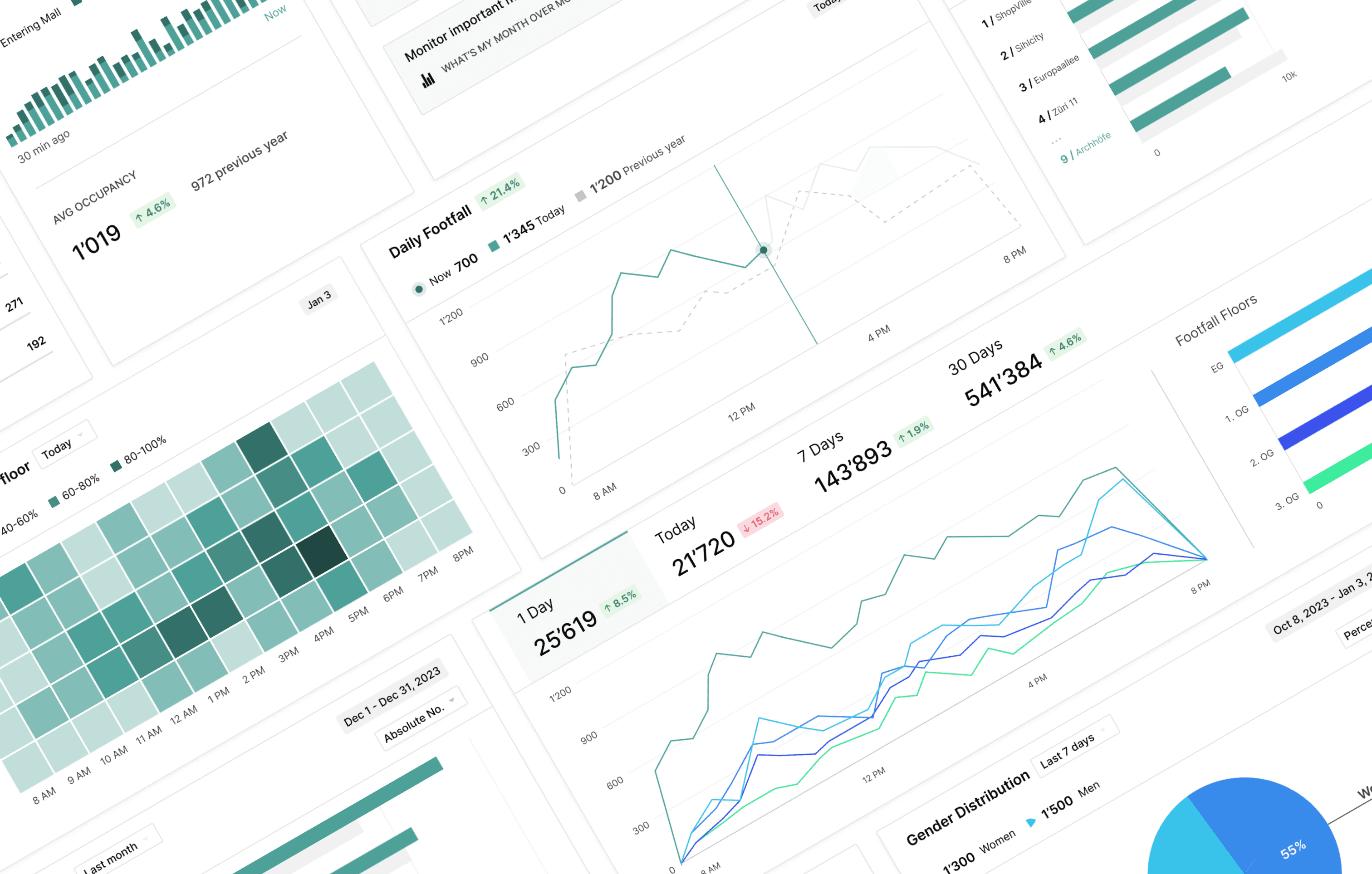
Widgets at the top of the mall manager dashboard display live data for a quick overview without scrolling. A primary graph shows different time periods, allowing managers to track the mall’s performance today and over time.
Mall Manager Detail Page: Predictions and insights are displayed at the top for quick access to key metrics, with footfall trends over different time periods to track and compare performance over time.
This section shows a series of graphs, tailored to each manager level, highlighting key metrics and additional data to provide deeper insights into mall performance and customer behaviour.
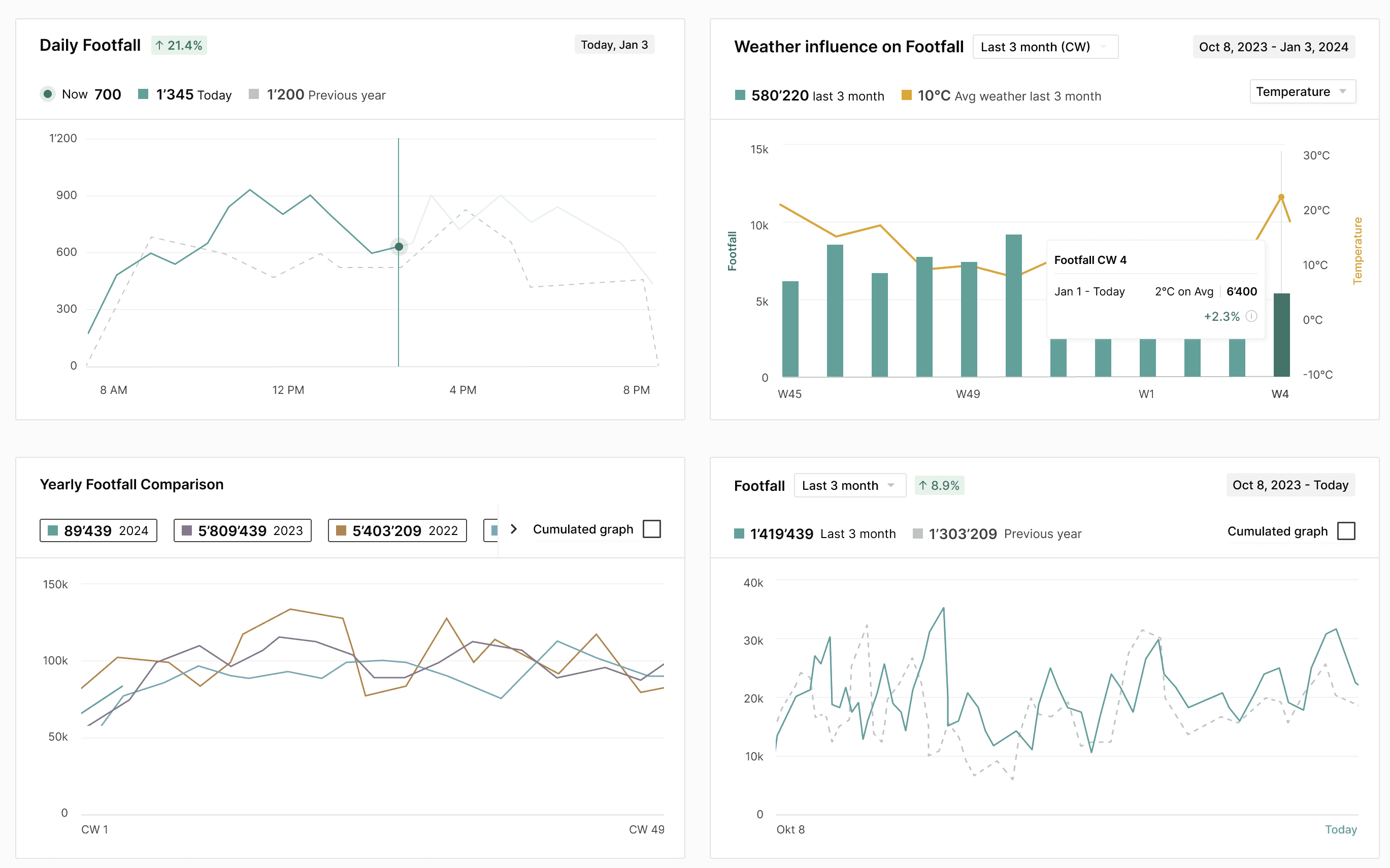
Breaking down the metrics into different time periods for comparison and combining it with other relevant data sets for deeper insights.
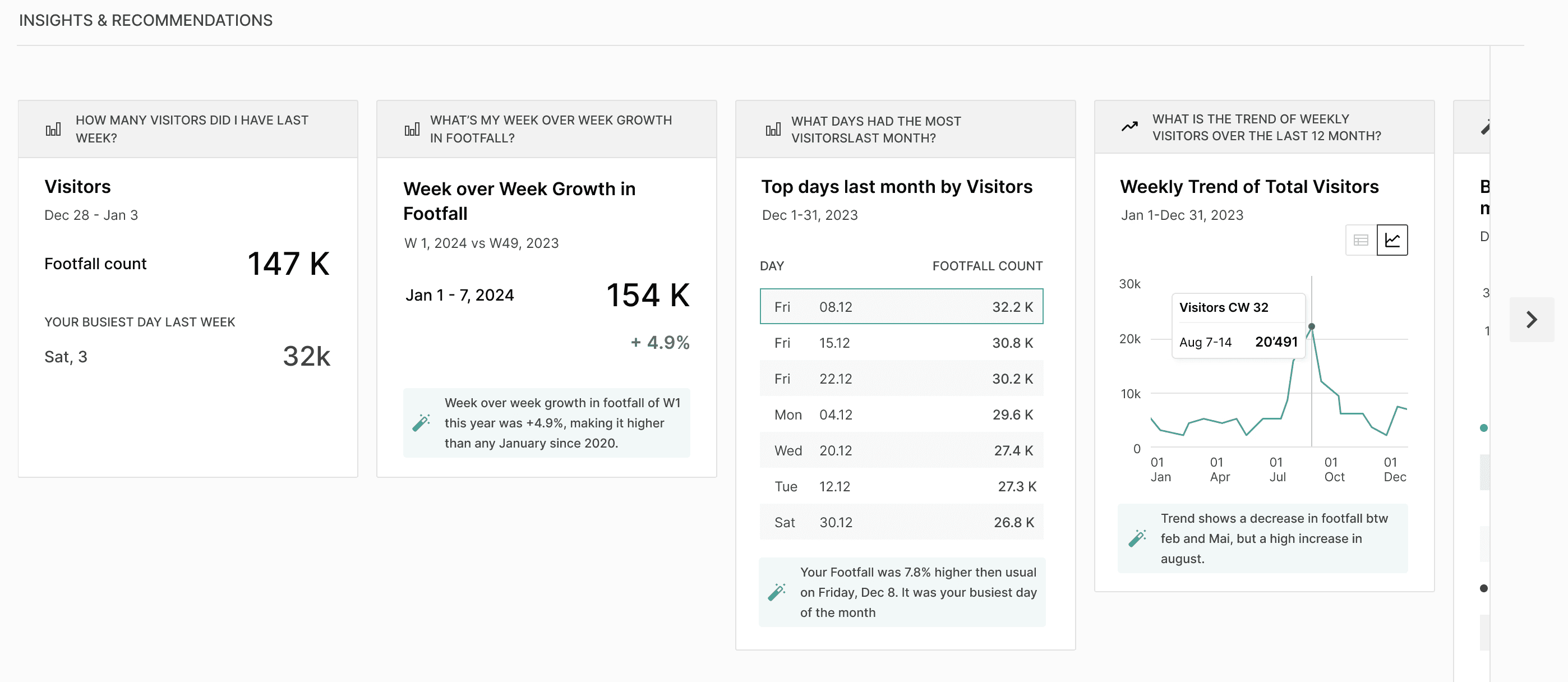
In the final section, insights and recommendations, we explored using analytics intelligence to detect trends and changes. Managers can be notified of shifts, with the system suggesting relevant data, visualizations, or insights based on user behavior. We conceptualized how actionable insights could be derived from existing datasets.