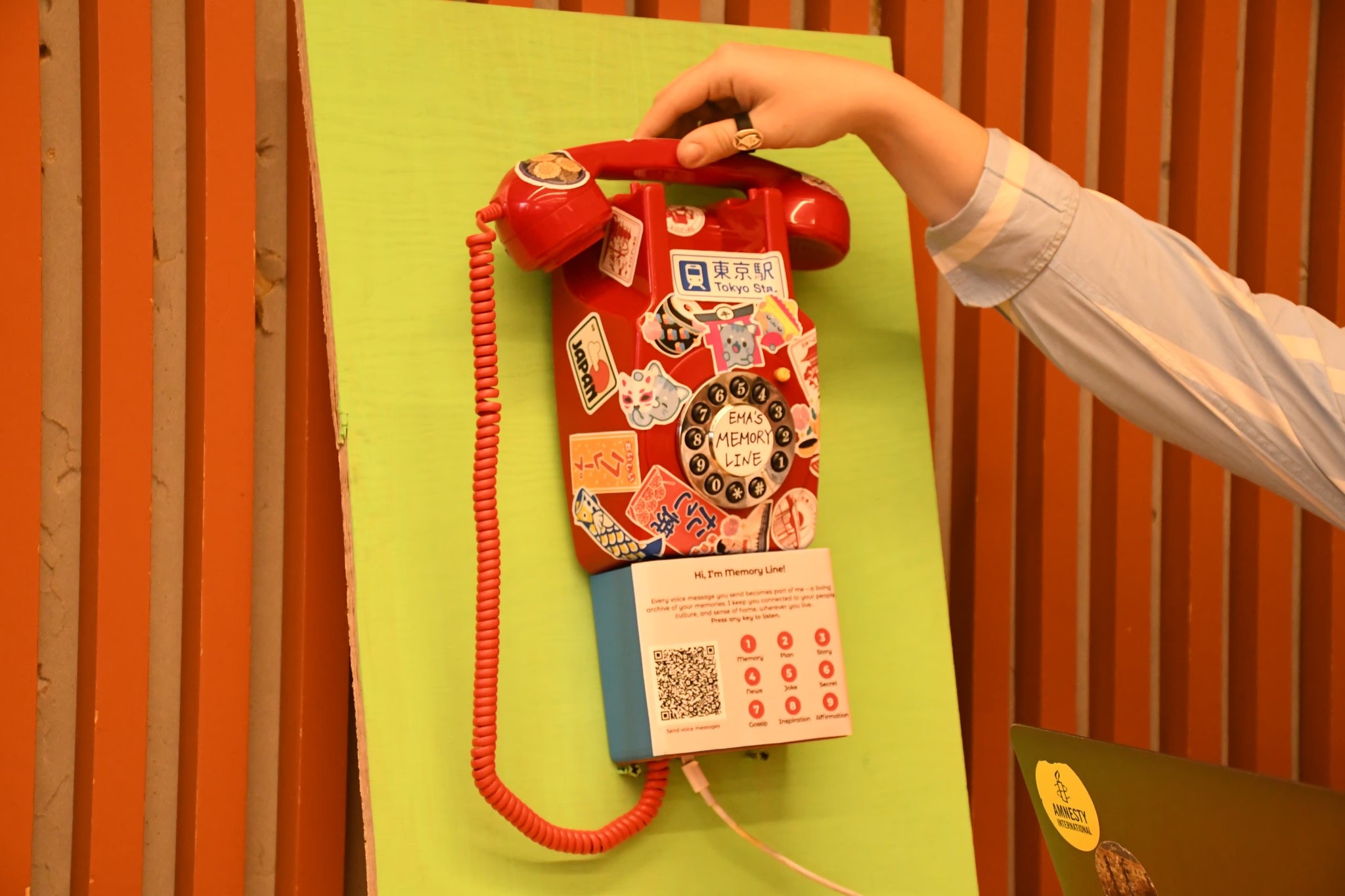
Memory Line
Interactive Audio System
Role
Prototyper &
Designer
collaborators
Anna Likhanova
Hao Xin-Chen
Alric Monteiro
Designing for Rituals
For the design brief, we focused on rituals and how technology might enrich, create, or challenge them. Because rituals are intentional, culturally grounded, and emotionally meaningful, we chose to design a new ritual for a specific audience. Drawing on our international backgrounds, we explored different ritual practices and identified third culture kids as a particularly rich context.
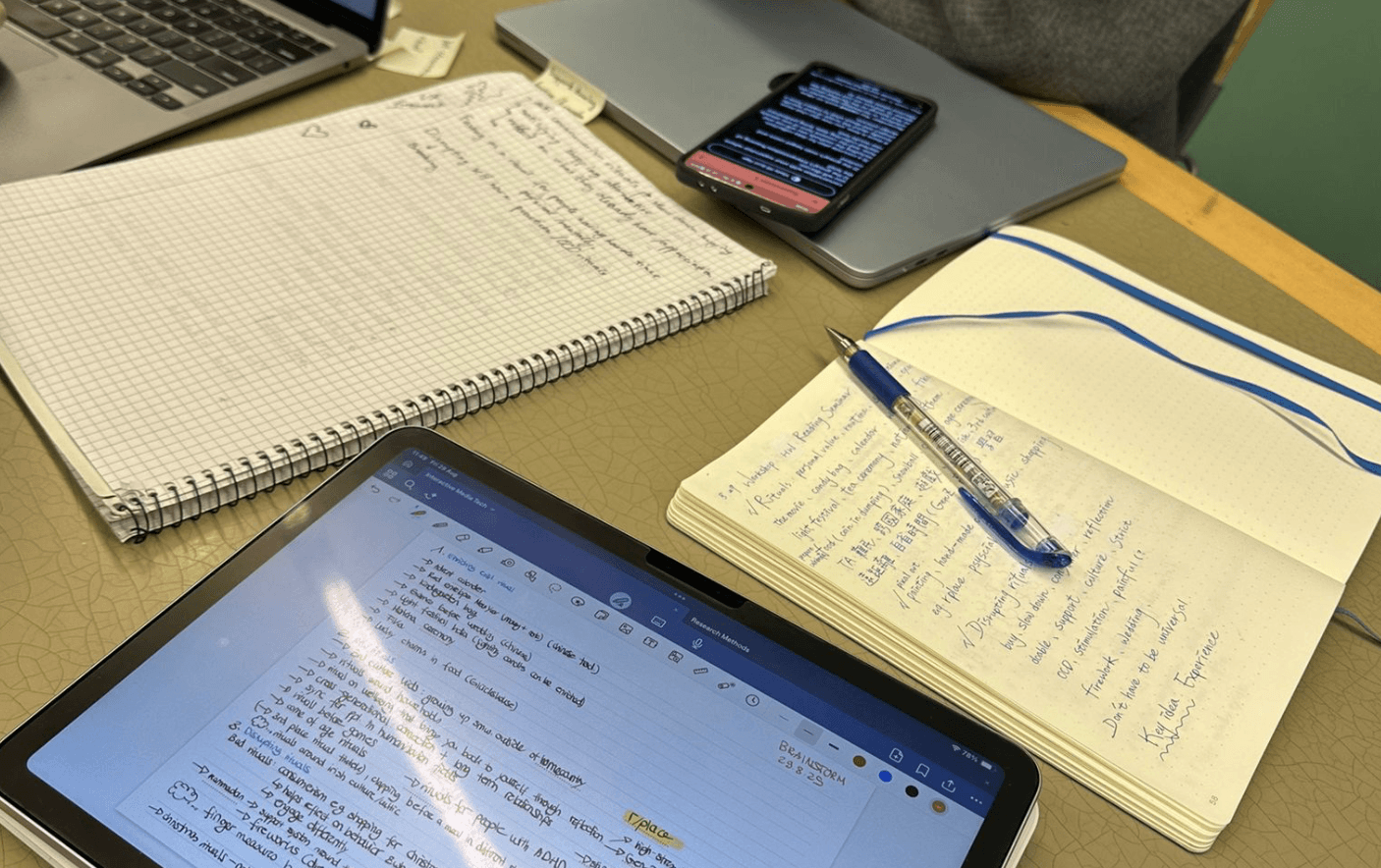
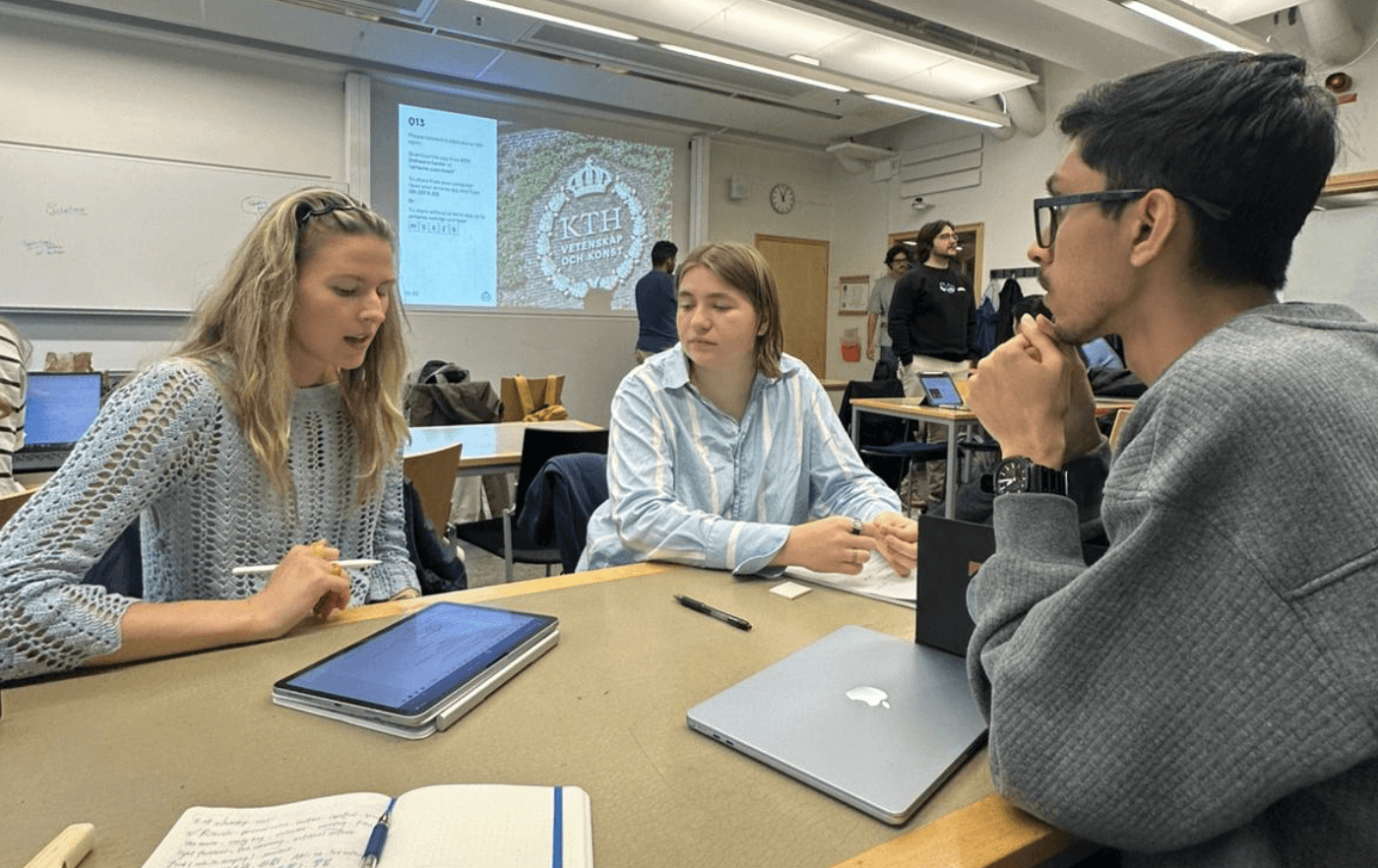
Initial research
UXR
Who are Third Culture Kids (TCKs)?
Third Culture Kids or TCKs in short, are individuals who spent a significant period of their developmental years or their formative years growing up in a culture different from that of their parents.
Identity, Connection and Belonging
TCKs may share several identities with the places they grow up in but have no concrete sense of identity. They may often feel as though they exist between cultures, or that they do not fully belong to any single one.
Literature Review
To gather Insights into identity & belonging in TCKs.
Semi-structured interviews
Interviews 11 people, 5 working professionals and 6 students.
Focus Groups
Complemented our interviews by discussing shared lived experiences.
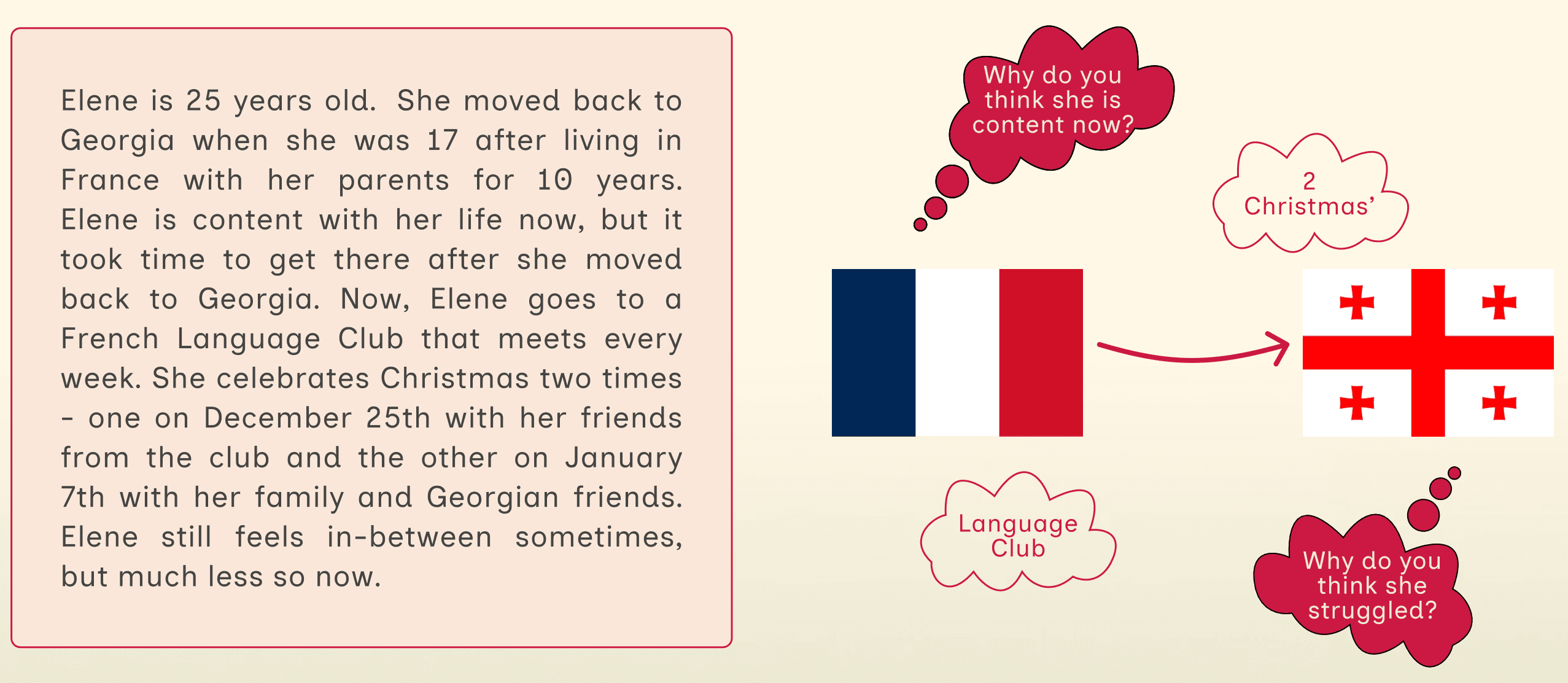
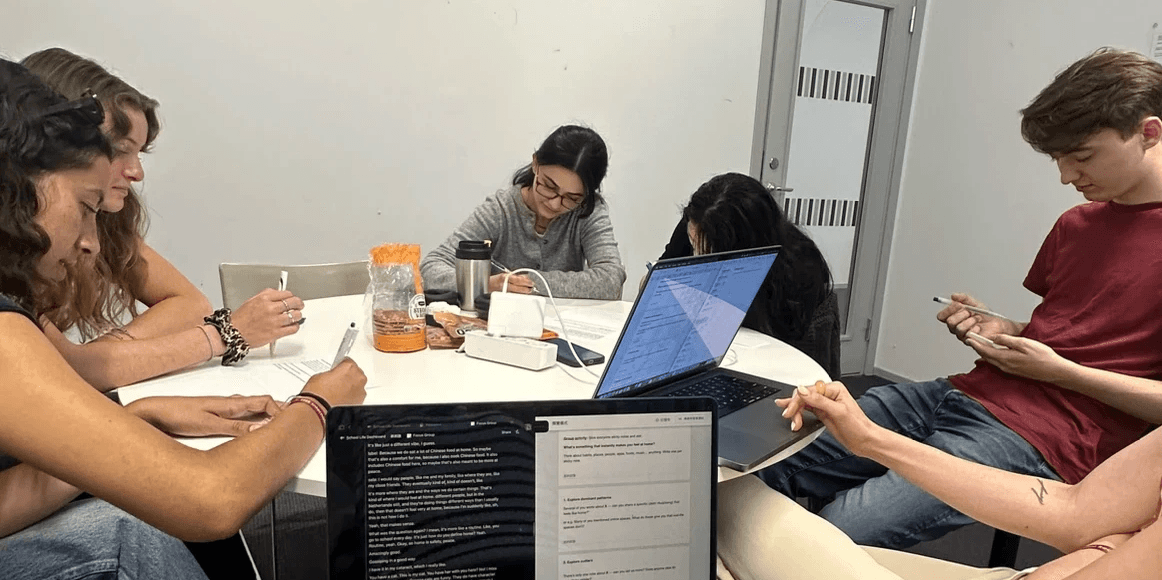
Vignettes & Focus Group
Data Analysis
Our 5 most important research findings were indentified using the Affinity diagram method.
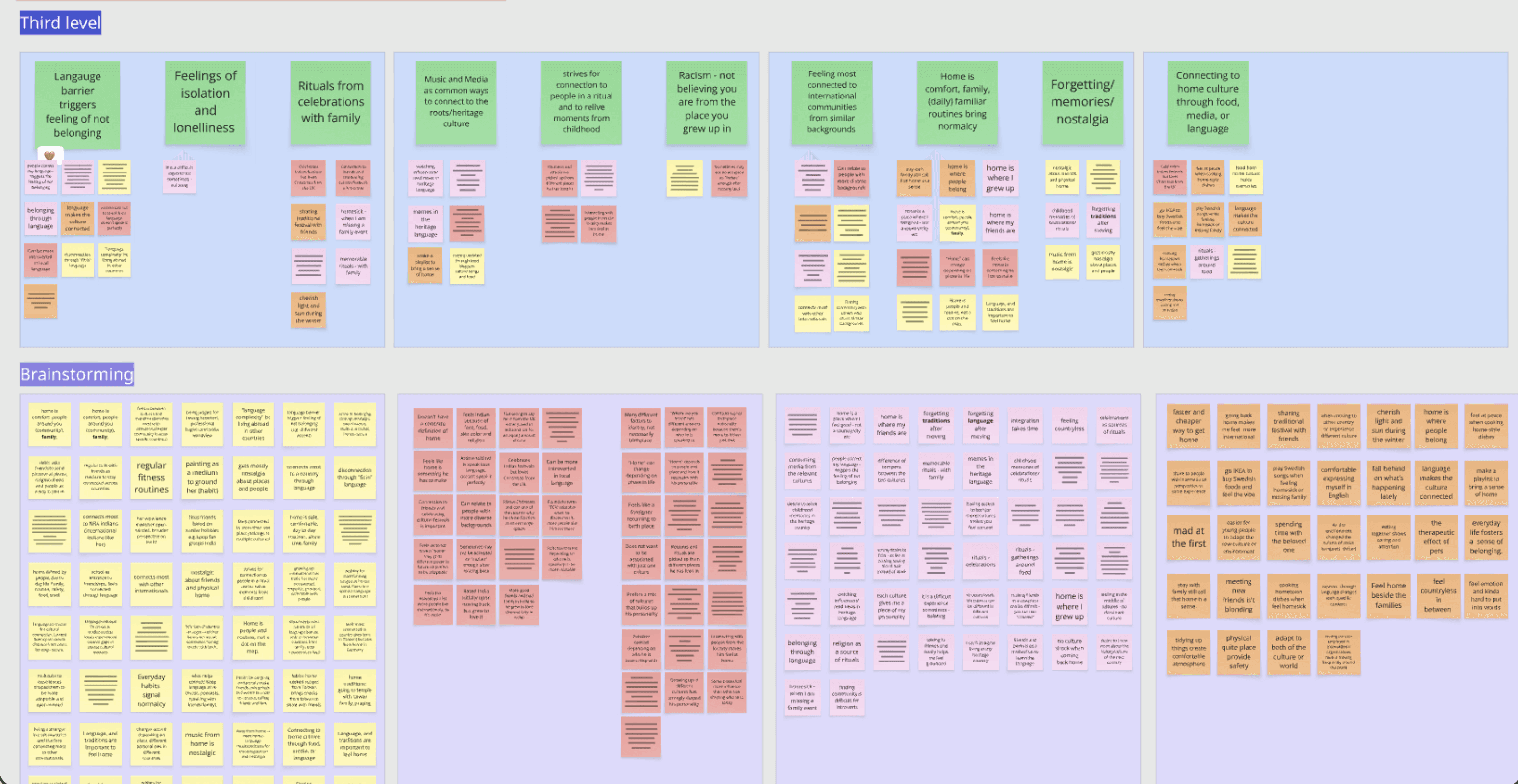
Affinity diagram
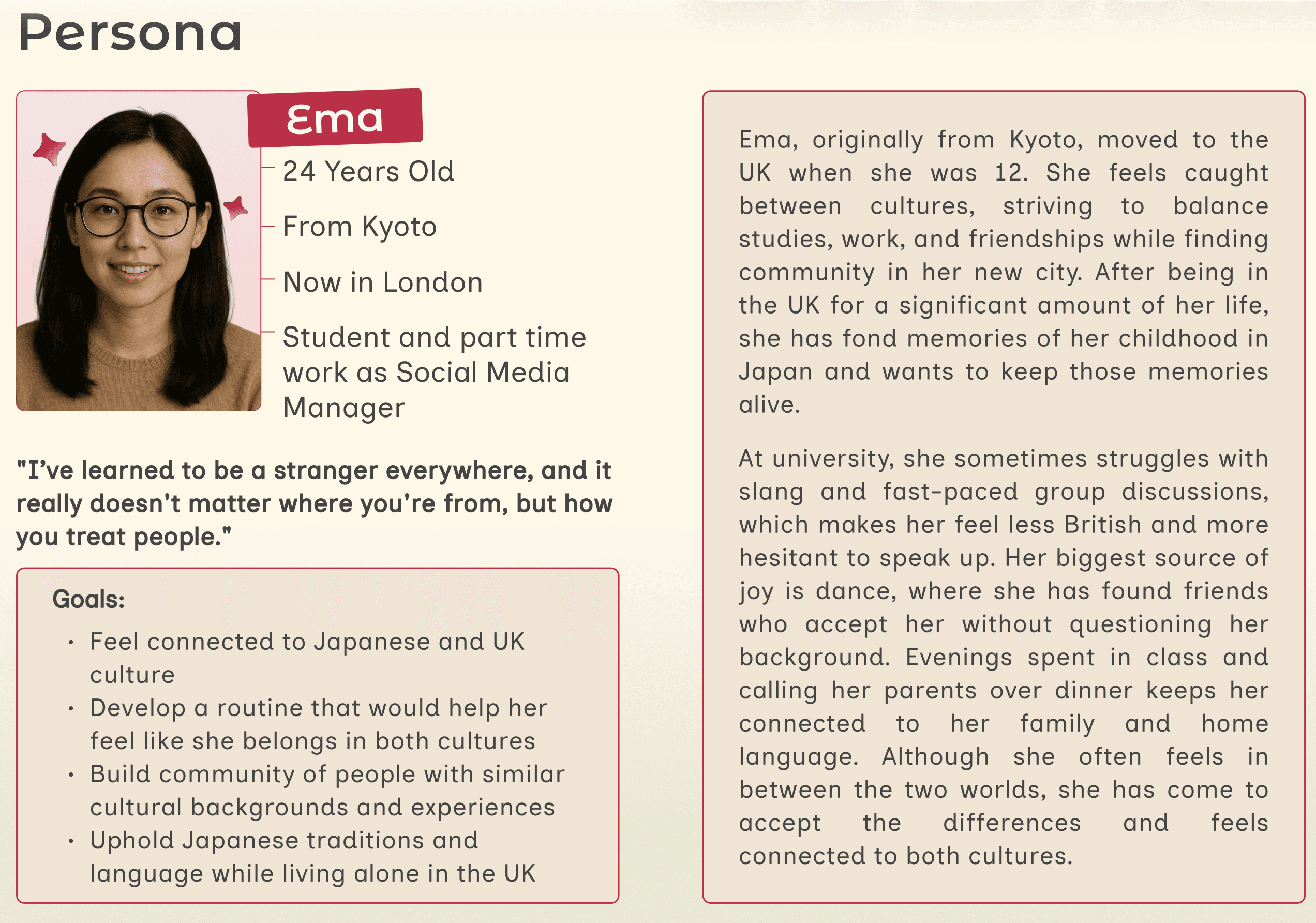
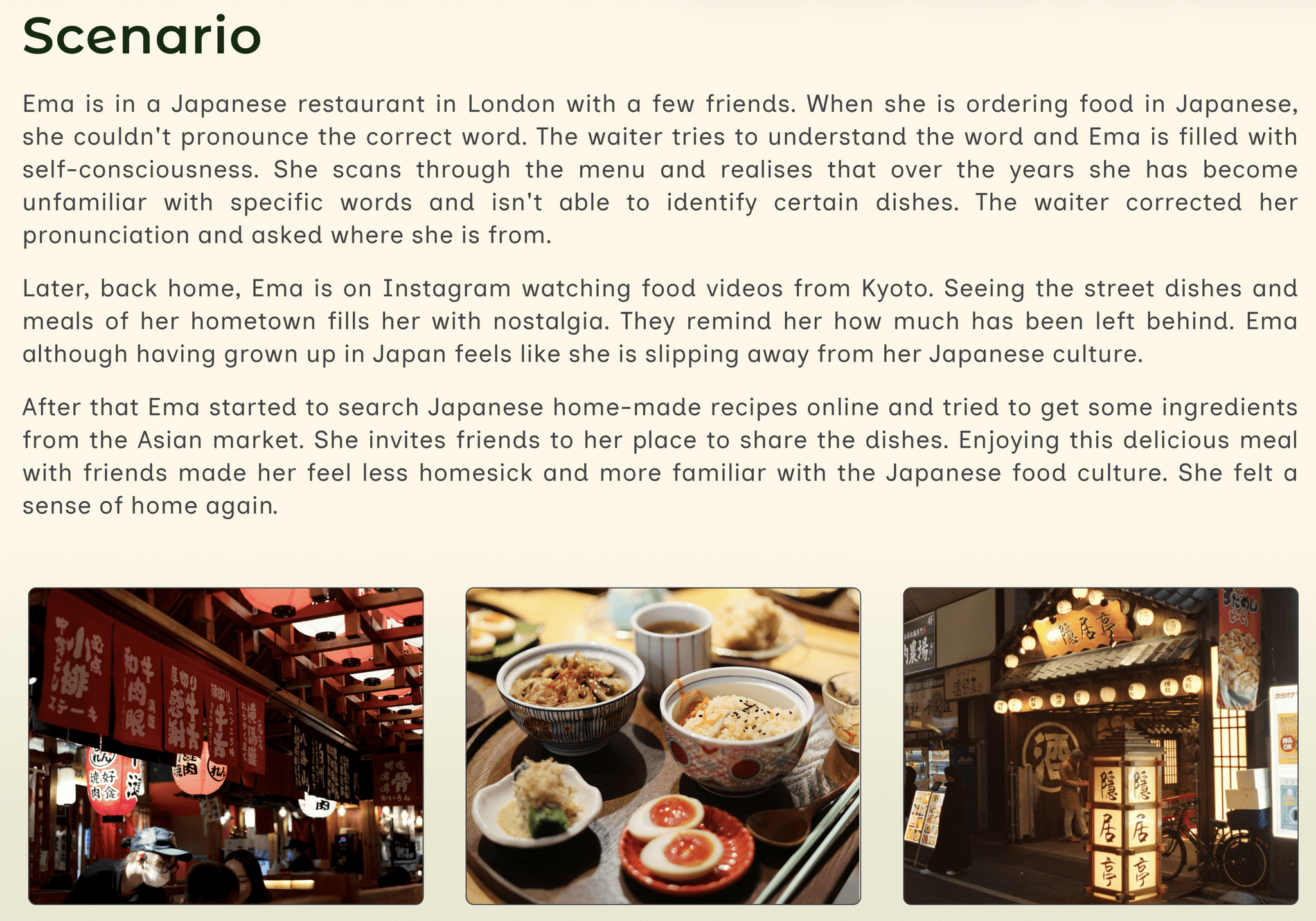
Persona & Scenarios
HMW
How Might We help TCKs reconnect to their original culture and traditions because they want to uphold those traditions as they navigates adult life away from family.
Ideation
Before narrowing down, we tried different ideation techniques such as brain-dump, sketching, worst possible idea. The idea is to provide a dedicated physical space to listen to voice messages from friends/family to reconnect to home.
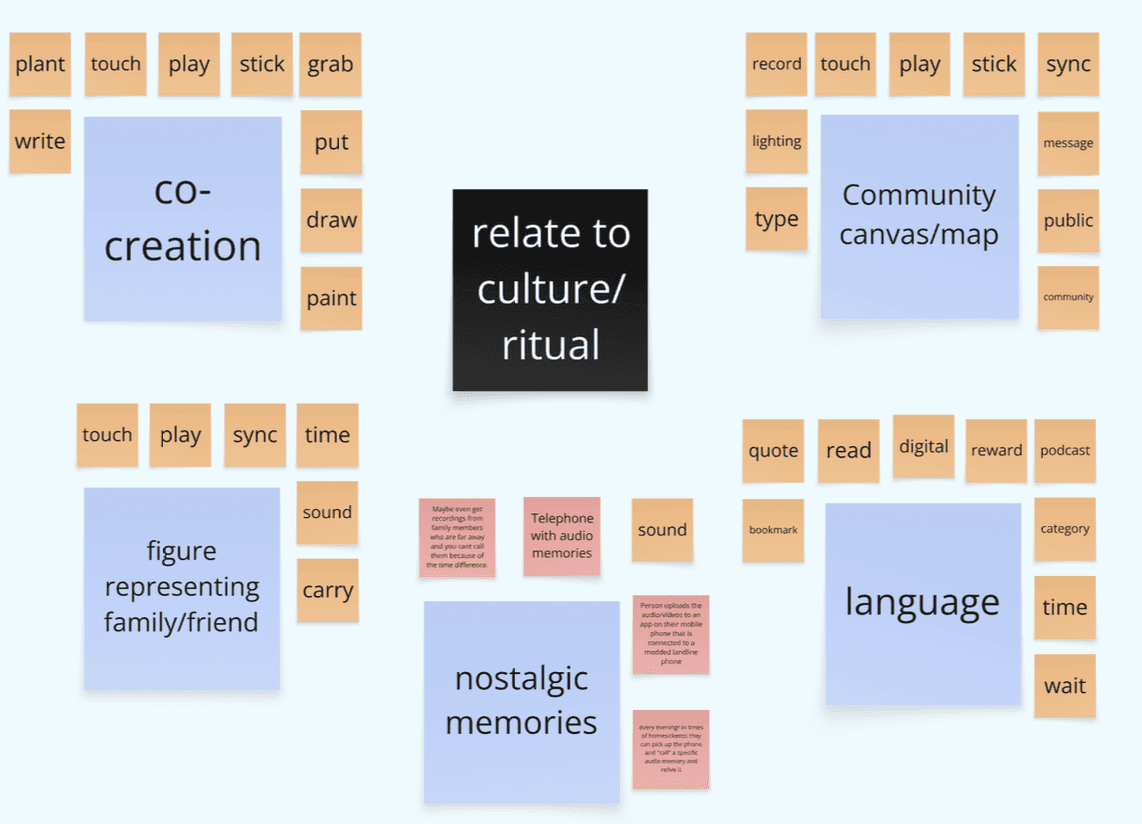
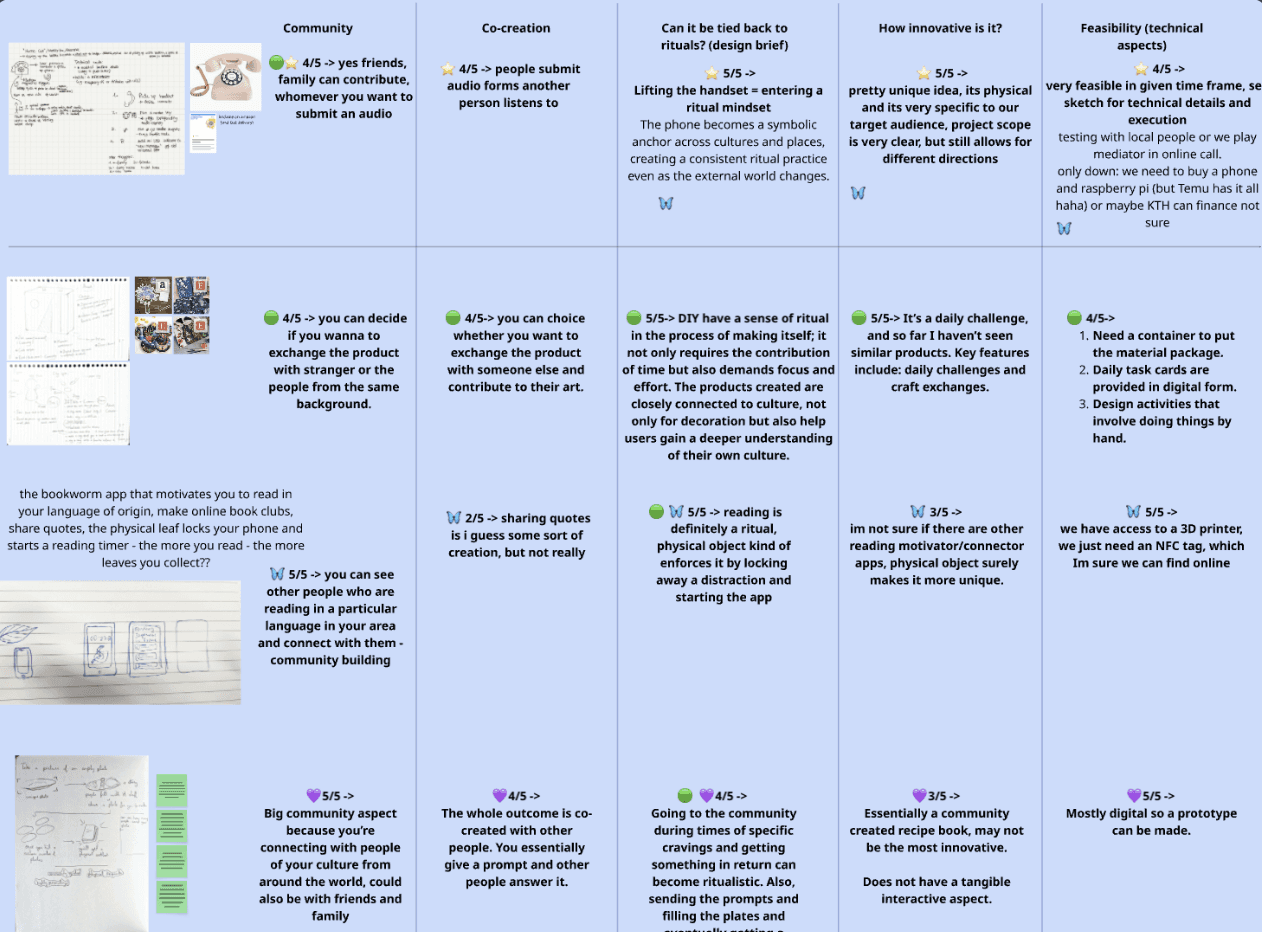
Mapping & prioritization
Prototype
What does Memory Line do?
the prototype, users select a channel (memory, story, gossip, secret etc.) to hear audio messages through the handset. Messages come from friends and family, or users can upload their own. The concept creates a dedicated space to reconnect with home through voice.
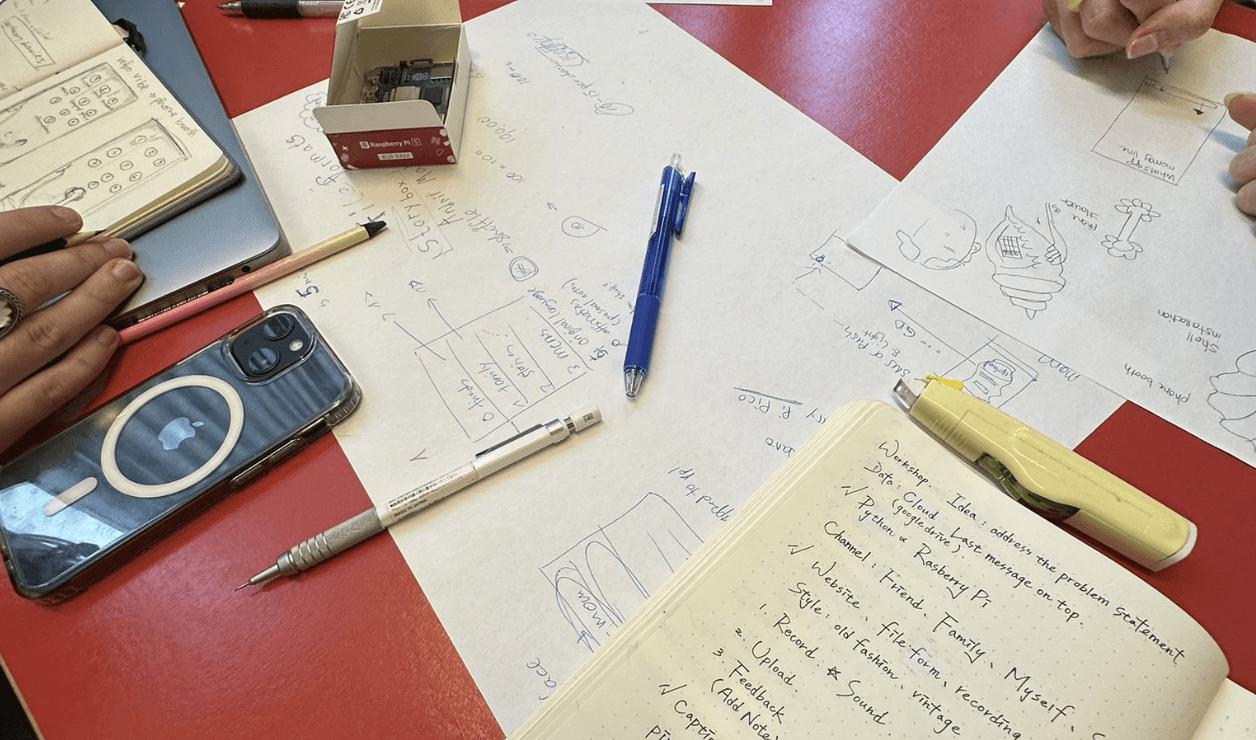
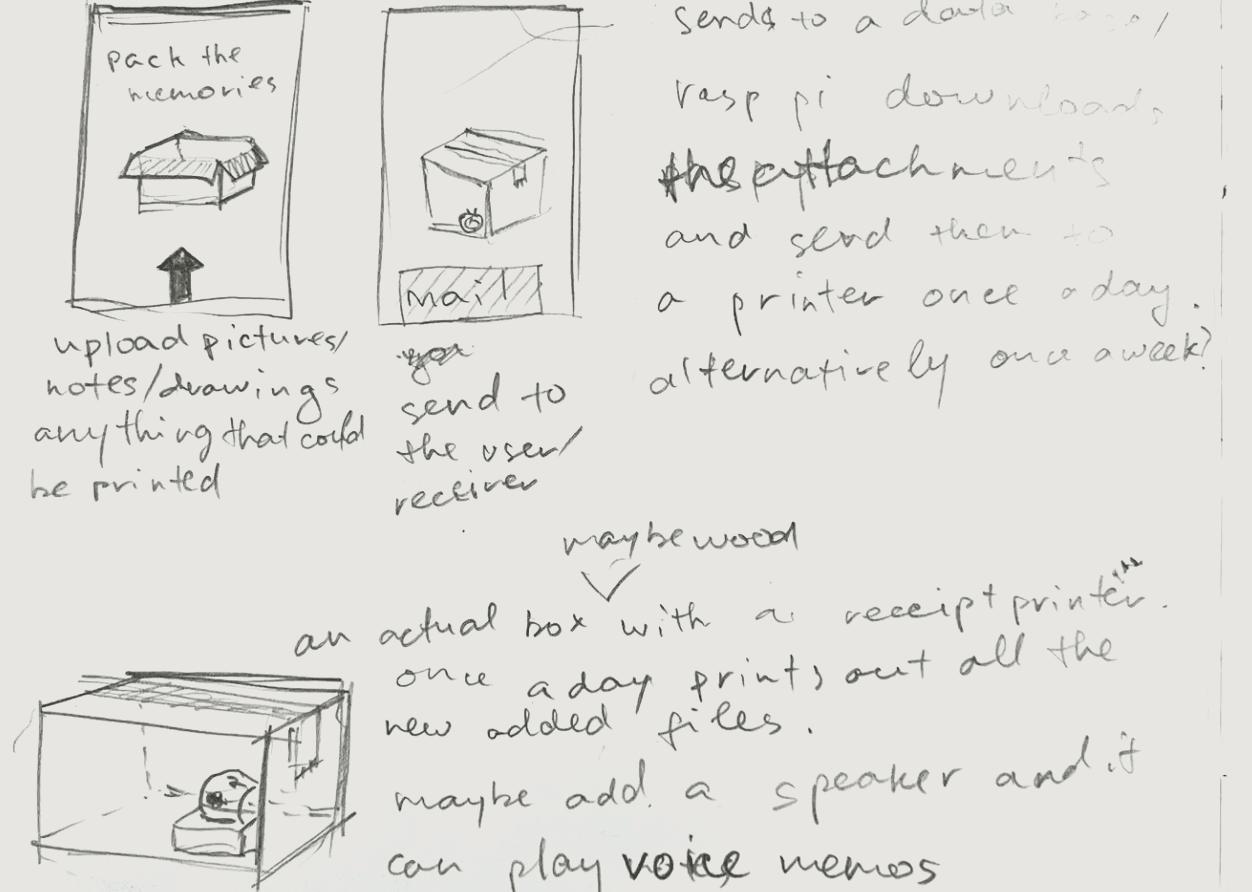
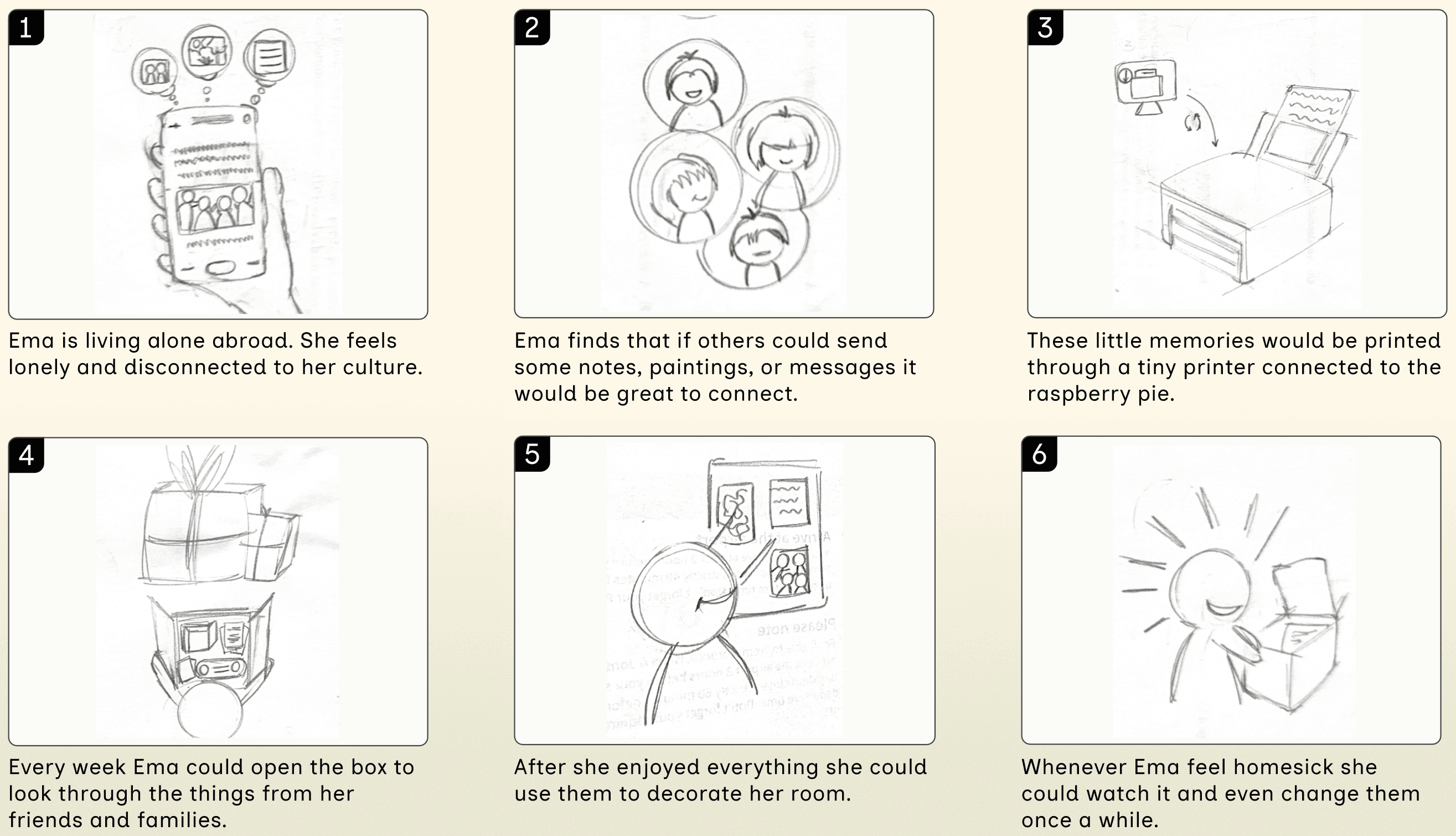
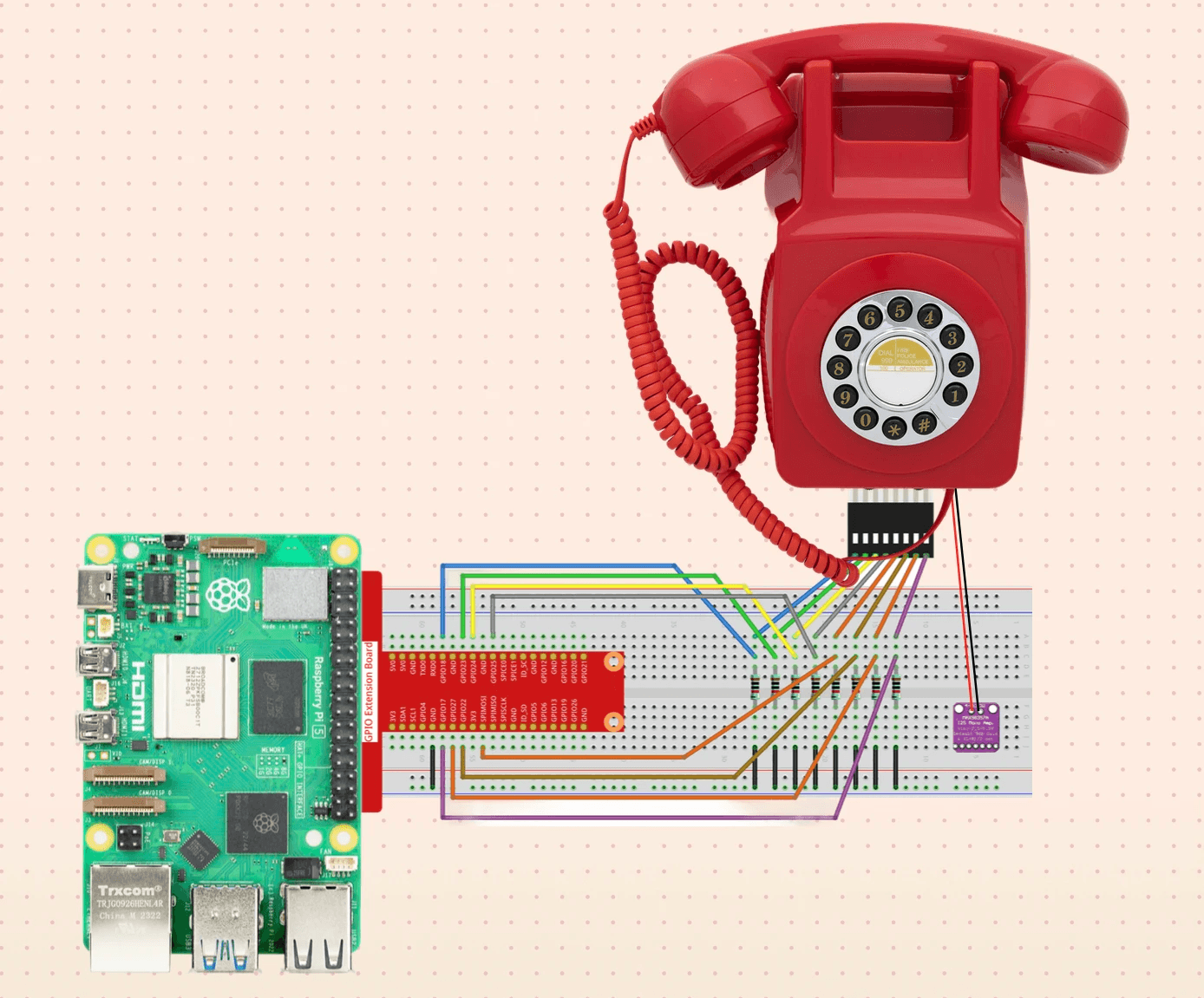
Lo-fi protoyping (sketching, storyboarding, paper protoypes..)
Hi-Fi Protoype
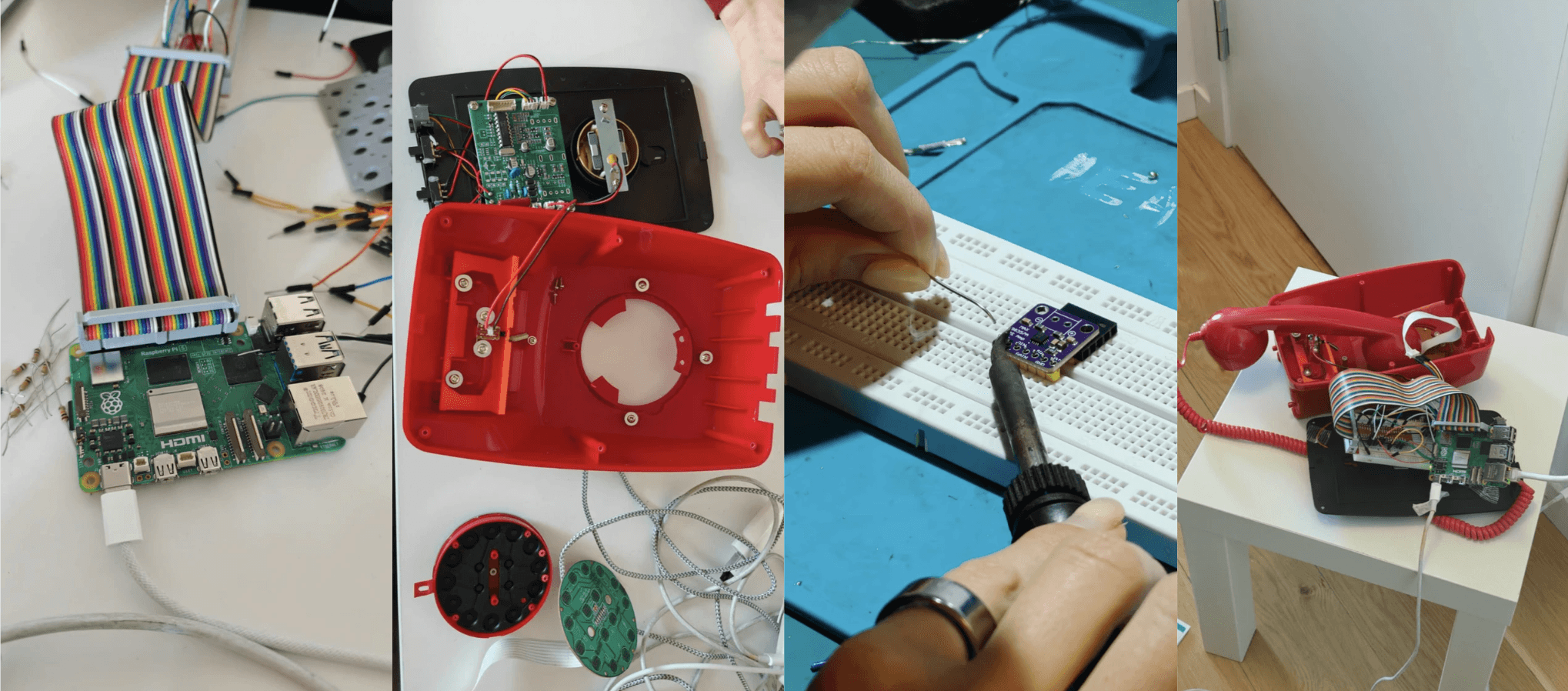
Setting up raspberry Pi – writing code for interaction – wiring and soldering – assembling the phone
Uploading Audio
We designed the upload interface for recording and sending voice notes in Figma, testing and refining it with users. The playful design, inspired by Japanese phone booths, aimed to evoke nostalgia.
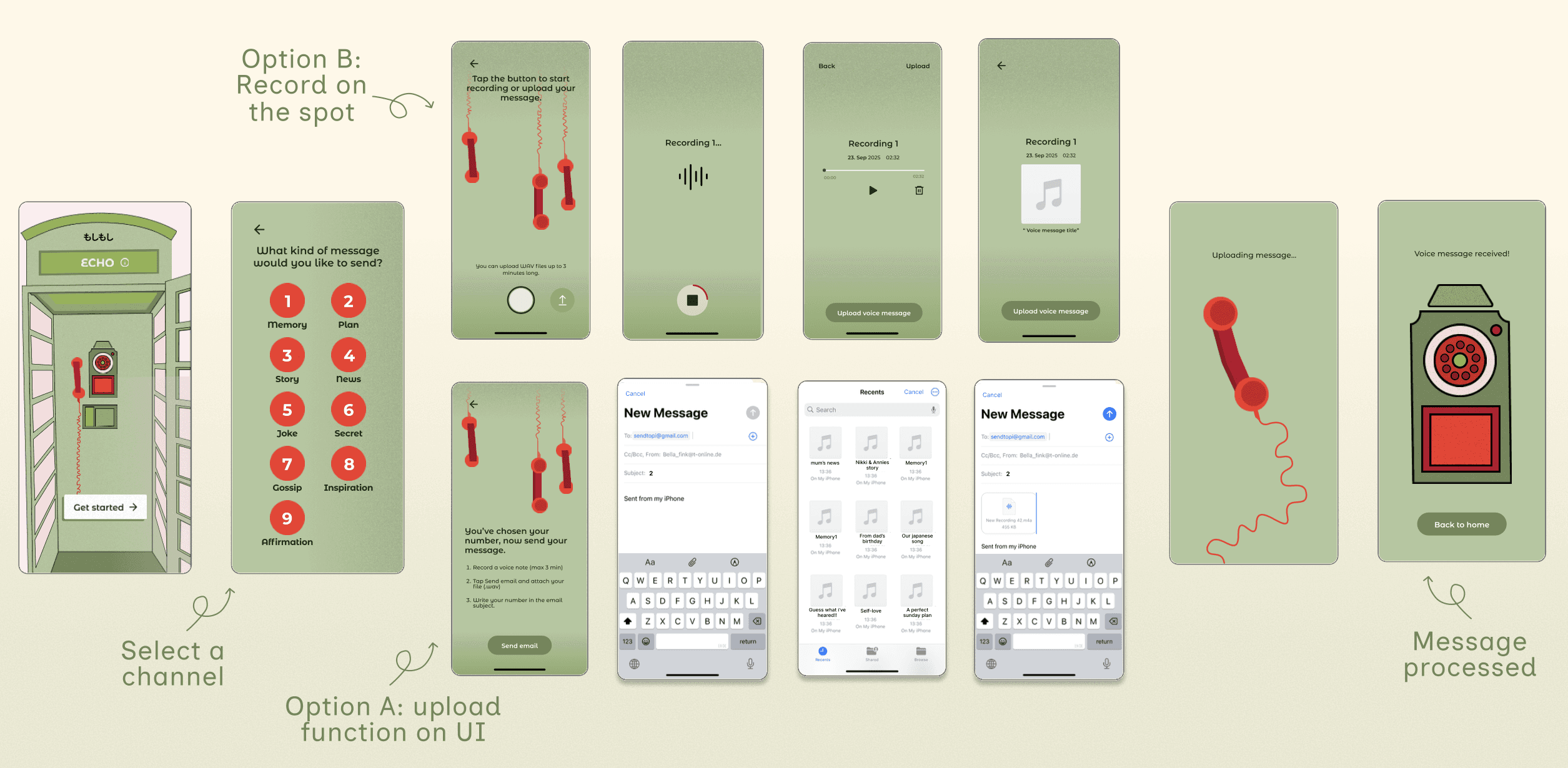
Option A: an email interface where people record their messages outside of the web UI; Option B: a web UI where people record and send their voice notes from.
Installation
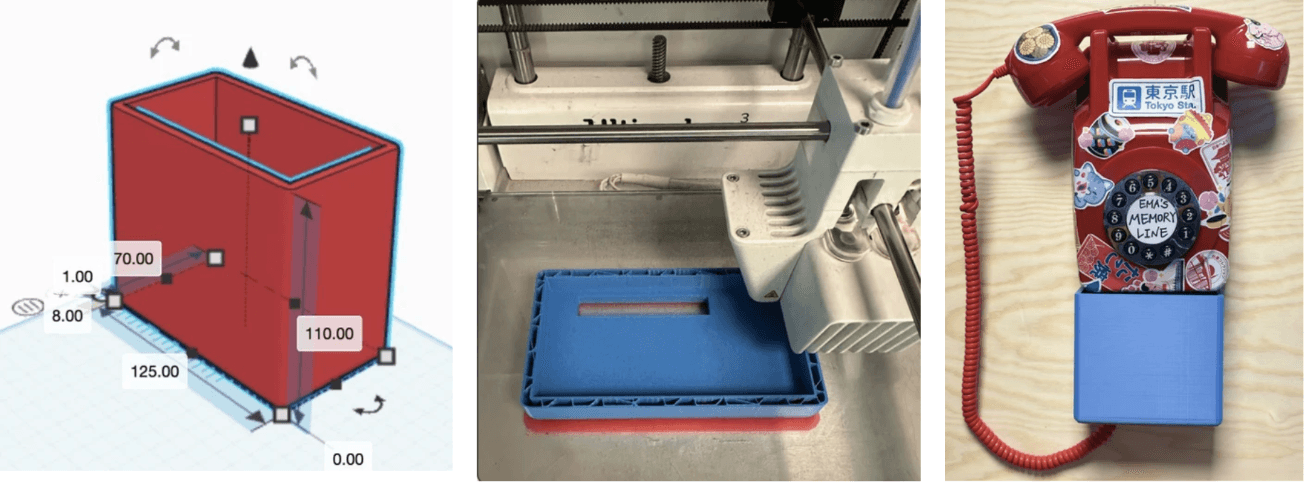
3D printing to store cables.
Evaluation
In the follow-up interviews, user reported:
Physical phone feels comforting & promote presence
tactile use recalls “physical diaries” – phone evokes nostalgia.
Users enjoy customizing their phone with stickers tied to their home country.
A/B testing showed in-app recording and sending feels more seamless and natural.
Some suggest a more neutral form, like a “glowing orb,” less tied to personal taste.
Users want sound cue between messages for easier distinction.
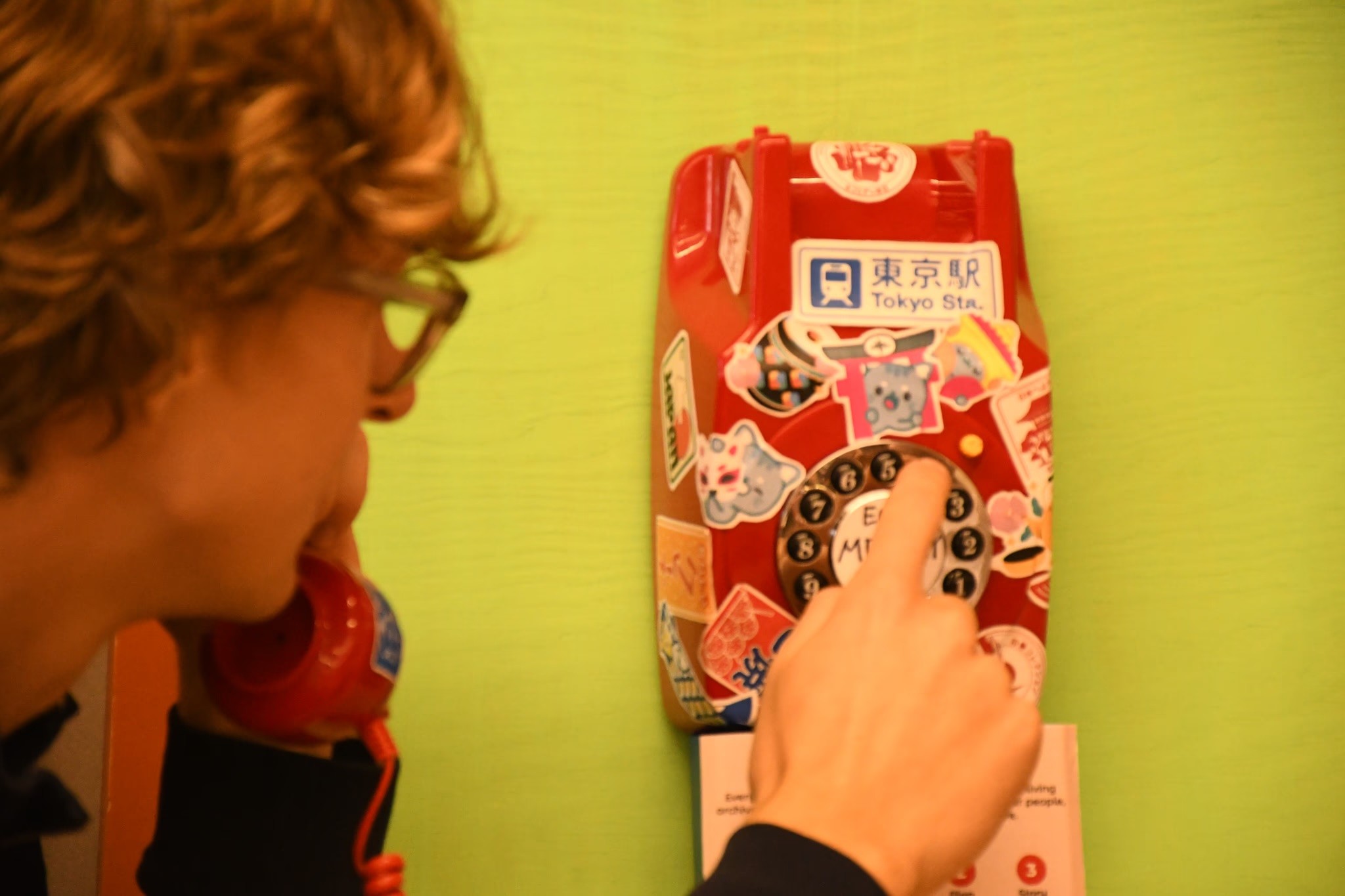
From the exhibition
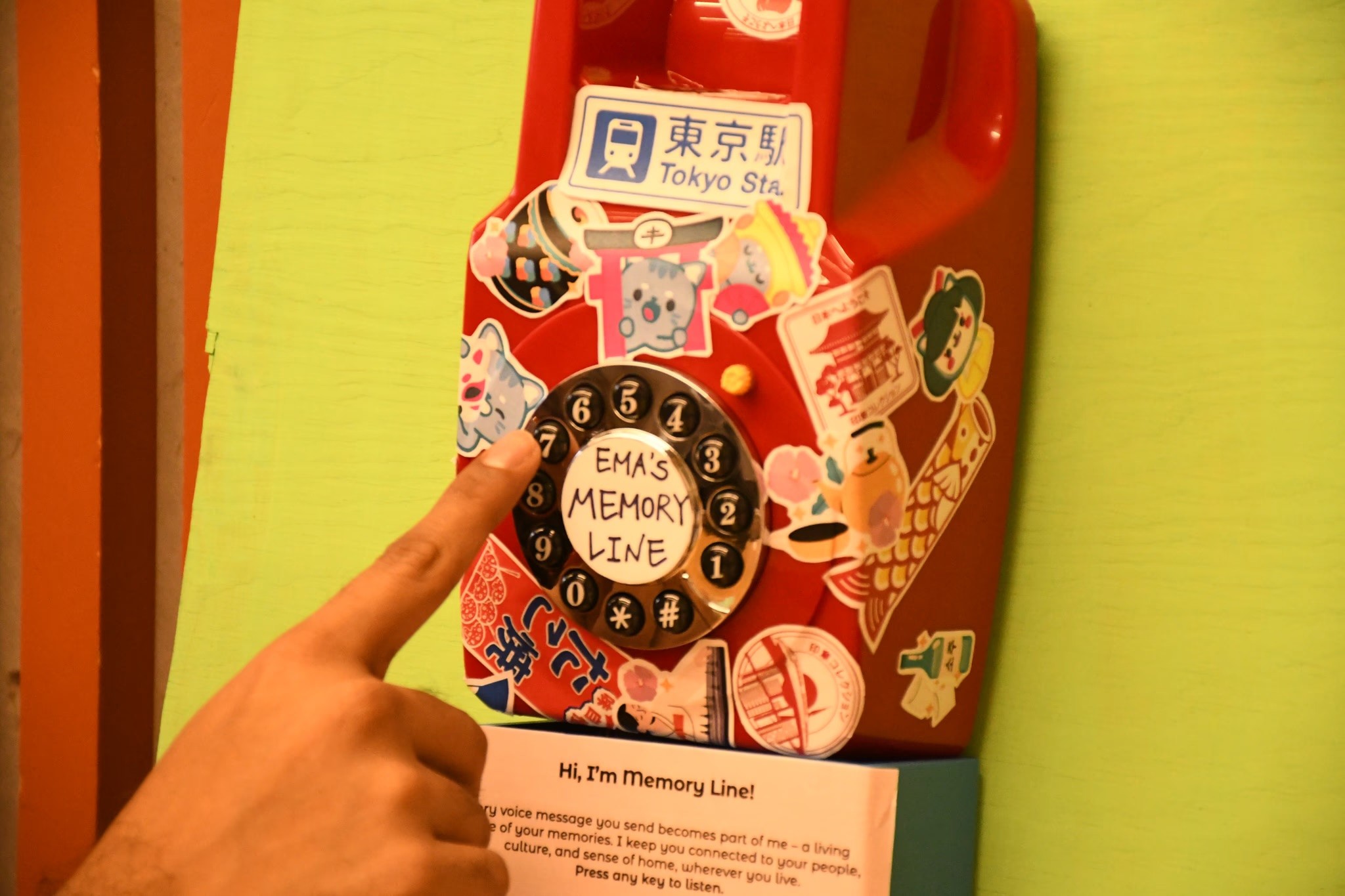
From the exhibition